Analytics

VeriFact analyzes statements in AI-generated clinical text against patients’ EHRs to identify factual errors, achieving 93.2% agreement with clinicians.

Industry voices discuss where AI will make the biggest impact in the healthcare workforce and which positions may be affected by automation.

Alongside warnings around AI, healthcare executives say the technology has long-term potential to improve clinical workflows and patient outcomes, making 2025 a year of both excitement and cautious scrutiny.
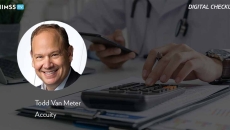
Todd Van Meter, Accuity CEO, talks about how the company helps providers reduce clinical denials by pairing physician-led review with AI that parses medical records to ensure error-free coding and documentation.

Executives weigh in on current valuations and hype around AI in the healthcare sector and what it could mean for the future.

The company will use the funds to accelerate commercialization of its brain-signal AI technology and expand its cognitive health applications.

Next year, AI will move beyond administrative support to become a workflow-integrated tool that drives predictive and proactive care and sees true adoption, according to healthcare leaders.
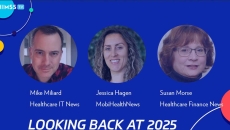
HIMSS Media editors discuss 2025 healthcare trends, including a shift toward mature AI use cases, scrutiny about ROI and regulation gaps as executives wrestle with choosing vendor partners and implementing AI tools.

Also, University of Queensland research has found ultrasound to be a safe approach to possibly treat symptoms of Alzheimer's disease in a world's first in-human trial.

Doug Meil, author of The Rise and Fall of Explorys and IBM Watson Health: A Personal Memoir of a Healthcare Moonshot that Misfired, discusses some lessons learned from that era, and offers perspective on where artificial intelligence may be headed next.