Strategic Planning

Jeff Ladner, Onspring's chief product officer, explains what healthcare leaders need to know about Medicare's six-year WISeR program, which will add new preauthorization requirements, documentation standards and appeals workflows.

Most provider data still lives in spreadsheets and siloed systems; Megan Schmidt, Madaket Health CEO, says this underlying data structure must be fixed before AI can enhance directory accuracy to boost patients' access to care.

As AI summaries bury providers in online search results, Ann Bilyew, WebMD Ignite president, discusses how health systems can fight back by creating rich, personalized digital hubs that drive trust, relevance and patient engagement.

Delaware Valley Community Health SVP and CIO Isaiah Nathaniel says that, after achieving AI successes in operations and revenue cycle, he wants to deploy AI to improve clinician productivity and provide better patient experiences.

Government regulation can slow health systems' AI progress; Ed Marx, Marx Advisory CEO, says showing policymakers AI's real-world benefits in person can help them understand its value more than traditional lobbying.

Lisa Suennen, managing partner at American Heart Association Ventures, and Ruby Gadelrab, CEO and founder of MDisrupt, explores next steps after AHA's $1 million milestone investment into MDisrupt, including plans to co-develop a platform.
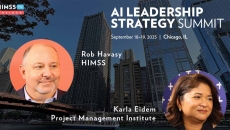
HIMSS' Rob Havasy and PMI's Karla Eidem predict that partnerships will be key around the world to making healthcare AI sustainable through sharing costs, resources and lessons learned.

Veradigm's Courtney Yeakel discusses what payers, health systems and others need to know about compliance with CMS' Interoperability and Prior Authorization Final Rule, which takes effect January 1, 2026.
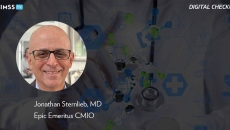
Creating strong healthcare IT teams, according to Dr. Jonathan Sternlieb, Epic Emeritus CMIO, comes from being willing to learn from others and from building communication, trust and respect with colleagues.

Rochester Regional Health's Dr. Everett Weiss says it is essential that everyone in your organization understands "what is our why" for using the technology, how it is helping them work more efficiently and how it is good for patients.