Organizational Governance

HIMSS Media editors discuss 2025 healthcare trends, including a shift toward mature AI use cases, scrutiny about ROI and regulation gaps as executives wrestle with choosing vendor partners and implementing AI tools.

Doug Meil, author of The Rise and Fall of Explorys and IBM Watson Health: A Personal Memoir of a Healthcare Moonshot that Misfired, discusses some lessons learned from that era, and offers perspective on where artificial intelligence may be headed next.

According to Kevin Ritter of Altera Digital Health, health systems must go beyond simple information exchange to ensure their data is discrete, normalized and able to flow between multiple applications across the enterprise.

Arintra CEO Nitesh Shroff says the company's AI-powered platform turns complex clinical documentation into explainable, compliant codes that help reduce claim denials and support improving health systems' bottom lines.

Sandra Johnson, CliniComp senior vice president, says keeping data in a single longitudinal system makes it easier to prove AI's positive impact on metrics such as shorter stays, fewer readmissions and higher patient satisfaction.
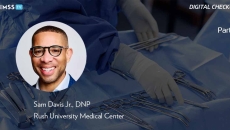
Sam Davis Jr., in the second part of our interview, says meeting regularly with surgical staff and building trust in its predictive analytics helped Rush University Medical Center enhance OR efficiency and forecast surgical demand with 90% accuracy.

According to Rom Eizenberg, Kontakt.io's chief revenue officer, hospitals in 2026 will deploy AI to track people, space and equipment and to optimize length of stay, which can help reverse losses and increase profitability.

Industry leaders say 2025 marked AI’s shift from hype to practical impact, though the technology remains unready for full-scale adoption and ongoing concerns about ethics and bias persist.

Jennifer Goldsack, CEO of the Digital Medicine Society, outlines DiMe's new project focused on aging-in-place with healthcare technologies and reimbursing remote patient monitoring as federal and private insurers' coverage policies evolve.

According to Barrett Loveless, infrastructure director at the PET Imaging Institute, EDR (endpoint detection and response) tools, combined with expert monitoring, have kept the institute breach-free for a decade.