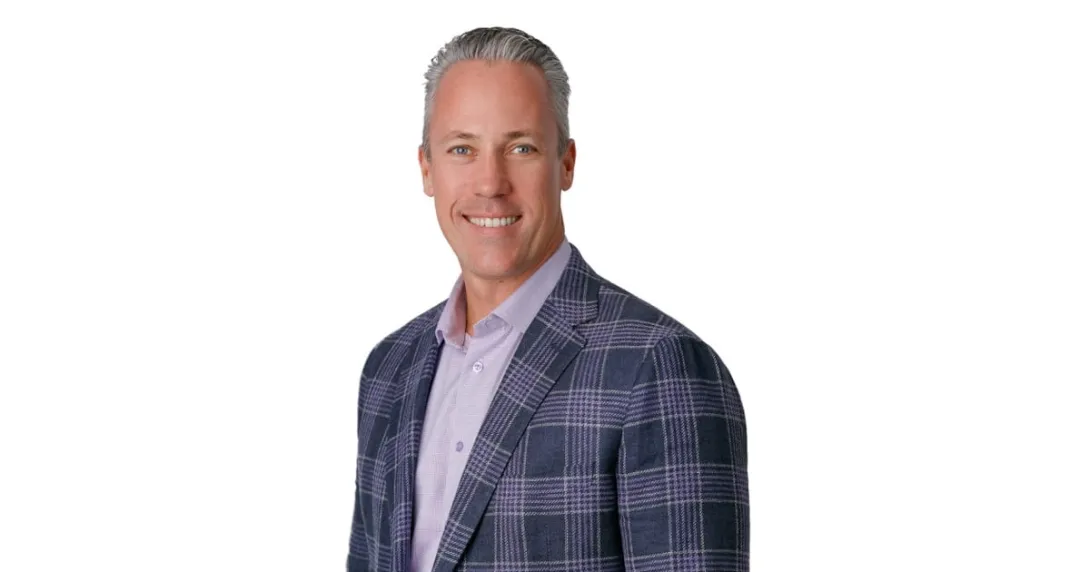
Jake Leach, CEO of Dexcom
Photo courtesy of Dexcom
SAN FRANCISCO – Jake Leach, the new CEO of glucose-monitoring company Dexcom, sat down with MobiHealthNews outside the JPM Healthcare Conference to discuss his vision for the company and how AI and wearables are shaping healthcare.
MobiHealthNews: What are your plans moving forward as Dexcom's new CEO? Is anything going to change?
Jake Leach: I'm going to build on the fantastic legacy that Kevin [Sayer] ... and I worked for him for the entire time that he was at Dexcom, and he was CEO for more than a decade. ... A lot of the significant growth in the category and at Dexcom was all under his leadership. So I'm going to really build on that foundation and lean on my background as an engineer. I really value problem-solving, being precise and continuous improvement.
We're going to build the next chapter on innovation by focusing on customers and really making sure that we are understanding what we can do to drive the innovation and what's important for users, and really broaden the access to CGMs [continuous glucose monitors]. There are so many people in the world who could benefit who don't have either coverage or even access to it, cash pay even. So there's a lot of opportunity for us to make a huge impact. And so that's really going to be my focus: How do we get this product in the hands of more people?
MHN: There is a lot of talk about longevity nowadays. What are your thoughts on how wearables are going to help improve preventive care?
Leach: The No. 1 thing that wearables do is they provide the individual with the information. So it's very empowering. With CGM, what we've seen is that even with very little instruction, when a user starts seeing real-time glucose data, they start understanding a whole lot more about their food and activity levels and how things impact their body.
It's the same with the Oura Ring. I mean, I use it all the time. I definitely try to do a better job sleeping, although lately it's been a little tough, but it helps me prioritize the regenerative sleep that I need to keep going. And so you start combining those signals, which is the whole idea of our partnership with Oura, is combining the experiences of the two technologies to give users more insights. Diabetes is impacting so many people around the world, so empowering users. It's a disease that you can make significant progress against if you have the right tools, and CGM is an amazing tool for that.
So I think we're going to continue to see expansion in wearables and new capabilities. And you know, the FDA just came out with some new information around, you know, kind of opening up the regulation and making it a little easier for some of the noninvasive trackers to be able to move things forward. And I think that proactive, innovative purchases from everybody, whether it's the industry or the regulators, are important for driving innovation and new use cases.
MHN: It is anticipated that millions of people will lose their healthcare coverage in 2026 because of changes to federal policies. Do you think AI and wearables can help close the gap in access to healthcare, enabling consumers to gain more insights into their health and take ownership of it?
Leach: In general, when you think about wearables and CGM, we certainly have programs designed for people when they do lose healthcare. [Dexcom] actually has a patient assistance program, specifically designed for people, if you have coverage and you lose coverage, whether it's Medicaid or any other program, we will help you and assist in getting a CGM for a low out-of-pocket cost. And it's really just something that we do because we hate to see that happen.
But, in general, I do think that it is going to take a little while. I mean, AI innovation is pretty unbelievable. The pace of innovation ... what we did a year ago with it, and what is happening now. I do think when it comes to truly saving costs and being able to drive more access to healthcare, it's gonna take a little while.
I think we're all working with AI. We're all leaning into [it]. How do we use it to enhance the solutions and make our systems more scalable for more people? But I do think it's going to take a little while. It's not going to be right away.
But as I look at outcome-based medicine, I mean, if you look at the outcomes that we can drive with CGM, we are very excited about opportunities to prove what we can do with a wearable for someone, and ultimately, we have shown time and time again that Dexcom CGM will save payers money in the first year if they put somebody on it because they don't show up in the emergency room with either low or high glucose. They aren't using the healthcare resources as much because they have the tools they need, and their management of diabetes is more healthy.