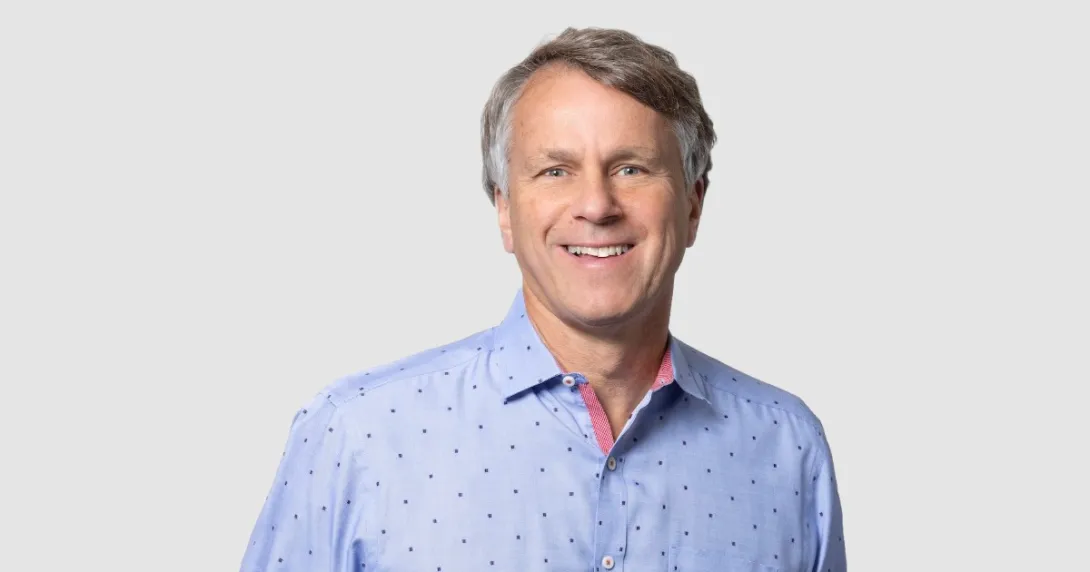
Glen Tullman, CEO of Transcarent
Photo courtesy of Transcarent
SAN FRANCISCO – Outside the JPM Healthcare conference, Glen Tullman, CEO of Transcarent, sat down with MobiHealthNews for an in-person interview to discuss forming partnerships, AI doctors and the need for greater adoption of technology due to millions of individuals losing their healthcare coverage following government pullback.
MobiHealthNews: What type of partnerships are you looking for? Are there certain companies, organizations or health systems that stand out to you more than others for any particular reason?
Glen Tullman: I was having a lot of conversations because we're at JP Morgan and everybody is here, and one set of conversations was with health systems – we're already partnered with the highest-quality health systems in the country – and those are simply what they're going to be facing. And asking us, can we use your technology?
Now the providers are coming and saying, "We already partnered with you. You already refer us business. We like you because you pay us in three days, you send us business, and it's clean and it's easy, and everybody's happy. So can we do more together with you because we know this onslaught is coming."
MHN: Shortages exist within the healthcare workforce and, like you said, millions are slated to lose coverage. Do you think one day we will have AI doctors?
Tullman: Well, what I think is this is the first year that we're going to see a pivot to saying the first place you go is not to call your doctor. It's going to a safe, secure trusted app. And those words are really important because we're going to see a lot of apps out there, but just like going on the internet and asking questions, you have no idea who's pitching and what you're getting. So it has to be trusted. It has to be secure. You know, we are again leading in that space in terms of making sure that the platform we built on is a walled garden.
MHN: There are a lot of rural areas where people don't have access to care, but do you think there could be a detriment – maybe it will be forced on the lower class or poor more often?
Tullman: Well, again, what I would say is, you made an important point. Today, if you have no care, getting some care is better. We're strong believers that everyone has a right to get quality care in this country, and we can afford to do it, and we don't have to spend any more money to do it. We think you can spend less money, but you have to do it more efficiently.
So if you said to somebody who was knowledgeable, do you want your X-ray reviewed by an AI-enhanced reviewer or by just a person who has been doing this for 15 years? The answer should be "by an AI-enhanced [reviewer]," and it's not a function of a poor person. It's a function of getting the best quality care, so I think we can deliver very high-quality care to everyone using AI as the first step.
I have the wealthiest people in the world, and they're doing things that I look at them, and I say, "Why in the world?" "Well, that's what my doctor said," or "That's what I read," and it's like, "No, no, there's a best practice," and we've been getting those best practices out.
So I think this is an absolute tipping point in terms of saying to people like, "Why would you go for care?" And the beauty is, the two areas that are hardest hit, rural and inner city, the nice thing is, they don't ever have to go anywhere to get world-class care. That's called telehealth. Now, if we can make that even more effective, then they're just getting better and better care.
And I think this works around the world as well because everyone wants U.S. healthcare, but we haven't figured out how to deliver it, even to our own folks. But if you think about every other industry, we've been able to. Google was invented here, but all of a sudden, everybody in the world is using it because search makes you smarter. And, by the way, it wasn't wealthy people only.
MHN: No, I know.
Tullman: No, I mean it. There's an equity question and it used to be, "Well, but don't you need a cell phone?" Well, unfortunately, I walk along the streets here, and I see some people out on the streets, they have brand-new cell phones. But that's their whole life, right there on that phone. And so that's why. And so if we gave everybody a phone and it had healthcare on it, we'd be better off. And I think these are the kinds of things we're going to start to see happening, but they're going to be forced because the government's backing away from care.
MHN: You said that we have this kind of reckoning coming.
Tullman: A perfect storm.
MHN: In what way is a perfect storm coming?
Tullman: There's a number of realities that are happening. One, the government, of course, is withdrawing care from anywhere from 8 to 15 million people. Whatever it is, it's millions and millions of people who will no longer get care.
Number two, there's a whole other group no one's talking about. We're hearing from employers, and they're saying some of our employees are no longer signing up for coverage. They can't afford it. And so because healthcare rates are going way up, people are saying, "I'll take my chances." And what that means is, we become the safety net without knowing. So that's another whole group. Well, where do these people end up? They end up in the ERs, and that's the most expensive place to get care.
We already have … the No. 1 cause of bankruptcy in the United States is healthcare. So we have this crisis coming. How do we resolve it? Again, really the only way to do it is to use technology. So I think we're going to start to see more and more people saying, "Start with digital first, and then see if you need to go." People are busy. Now, we've done that; in the old days, you'd say, "Well, if I can't get it locally, I'll do it digitally."
I went out to get running shoes, and I was like, "I'm out of time." And I went to Amazon. They delivered them to my house in three hours.
So we can create abundance, just like we've done in information, and we can do that in healthcare. And I think this is the perfect storm to do that because I think companies can't afford to do it the old way.
I think we're going to look back and see this as one of the biggest challenges to healthcare in this country that we've ever seen, and that is the withdrawal of care from millions of people. I think private industry is going to have to solve it because I don't think the government is going to. But I look at that not as glass half empty/glass half full, and say, "We're up to it. We have the technology."
And remember, this happened once before, and it wasn't withdrawn by the government. It was called COVID, and what happened? Overnight the technology worked. Millions of people got care. It was uncomfortable; it was awkward, but we did it. Now, years later, we're saying we've gotten much better at it, but now we need people to think just a little bit differently, and the beauty is, they can't afford not to.
So, I'm very excited about the future, and I think it's going to be led by innovative businesses, by innovative health plans, by innovative health systems, who all say the status quo no longer works, but we have an incredible digital option.
Do we need to make sure privacy is preserved? Absolutely. We're doing all those things. We can do all those things. That's easier than the alternative. And companies today, because of healthcare costs – we see companies with an 18% increase in healthcare costs – they can't sustain it.
So their choice is either, number one, I stop giving care to my employees. They don't want to do that, but they have to. Number two, I reduce the amount of care, but there's a third option, and that is, I look at it differently. I empower my people with this technology.