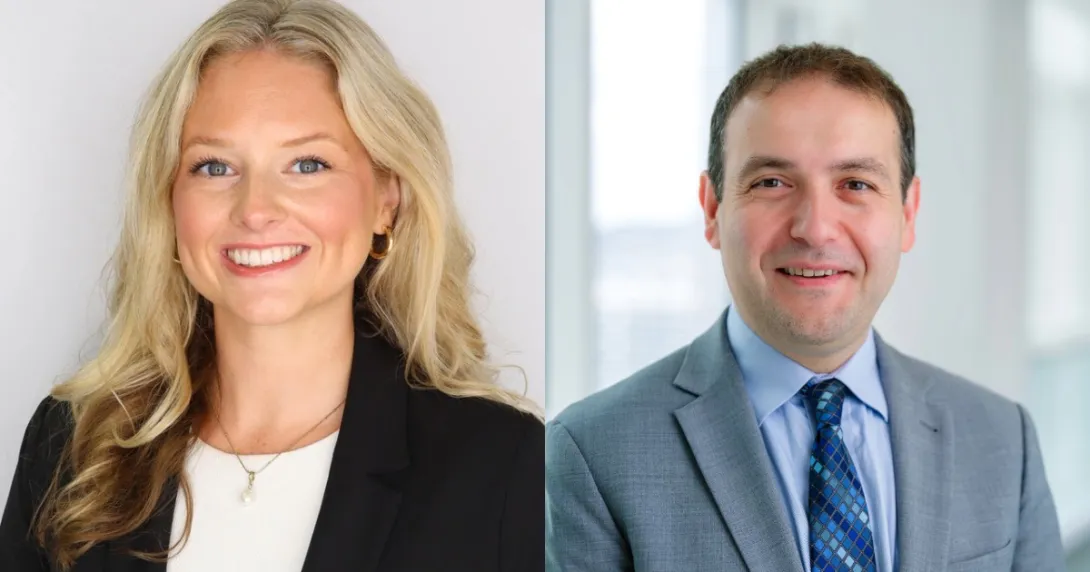
From left: Taylor Galloway, digital transformation manager at Mayo Clinic, and Ugur Sener, associate professor of neurology at Mayo Clinic
Photo courtesy of Mayo Clinic
Ugur Sener, associate professor of neurology at Mayo Clinic, and Taylor Galloway, digital transformation manager at Mayo Clinic, joined MobiHealthNews to discuss their upcoming session at the 2026 HIMSS Global Health Conference & Exhibition in March, where they will talk about changing how brain cancer care is delivered using digital transformation.
MobiHealthNews: Can you tell our re aders a bit about the Neuro-Oncology Anywhere (NOA) clinical trial portfolio?
Galloway and Sener: We developed the NOA clinical trial portfolio over the past three years with the overarching goal of bringing brain and spine cancer care delivery from the clinic to patients’ homes using technology solutions.
The initial NOA study investigated a remote cognitive assessment platform, where we serially evaluated patients with a history of radiation therapy to the brain. As part of this study, we completed assessments using a web and mobile-based application, conducted telehealth visits, utilized device-based monitoring and implemented a mail-order drug delivery solution. Participants could complete all study-related tasks from initial consent to completion of the study entirely remotely, without ever visiting the Mayo Clinic campus.
Building on the NOA study, we later investigated chemotherapy evaluations in the home setting. The second study, called NOA-242, systematically compared in-person evaluations to telehealth-based evaluations for patients undergoing oral chemotherapy. This study helped us ensure that chemotherapy administration and monitoring in the remote setting is accepted by patients without compromising treatment compliance or increasing adverse events.
More recently, we launched our third study, called Glioma Home-based Sequential Therapy (GHoST), which expands on our work from NOA-242.
The GHoST platform allows administration of multiple medications either individually or in combination in the remote setting, implementing virtual chemotherapy education, virtual treatment-related toxicity assessments, remote phlebotomy services and telehealth visits.
The platform was launched with 11 standard therapies but is already expanding to include experimental therapeutic agents. Our goal with this study is to accelerate development of novel therapeutics by making study participation as convenient as possible for our patients.
MHN: How is healthcare technology allowing for better care to be delivered outside of the clinical setting?
Galloway and Sener: Healthcare technology is enabling care outside the clinical setting by shifting healthcare from episodic, site-based encounters to continuous, patient-centered care. Digital platforms, remote assessments and connected devices allow clinicians to monitor symptoms and functional status in real time, identify changes earlier and intervene proactively rather than reactively. This approach is particularly important in neuro-oncology, where travel burden, cognitive changes and treatment toxicity can make traditional care models inadequate.
By integrating remote monitoring, telehealth and EHR-connected tools, care teams can maintain clinical rigor while reducing unnecessary in-person visits and expanding access to specialized care. Technology allows patients and caregivers to stay engaged, improves safety oversight between visits, and supports timely education and symptom management at home, ultimately delivering more equitable care beyond the walls of the clinic.
MHN: What do you hope attendees learn from your discussion?
Galloway and Sener: We would like to demonstrate to our attendees how we utilized decentralized clinical trial solutions, including remote patient consenting, device-based monitoring, web and mobile-based surveys and applications, telehealth visits, remote phlebotomy services and mail-order drug delivery.
In our neuro-oncology clinic, we have a patient population that is faced with significant neurological difficulties due to their illness, making travel to academic centers challenging. Our decentralized clinical trial portfolio provides our patients the opportunity to participate in clinical trials and receive experimental therapies without traveling to the clinic.
We are hopeful our solutions will provide a framework for our colleagues to implement similar concepts for treatment of other diseases. We believe decentralization will allow more equitable access to clinical trials while simultaneously accelerating development of new therapies.
Ugur Sener and Taylor Galloway's session "Revisioning Brain Cancer Care Delivery through Digital Transformation" is scheduled for Tuesday, March 10, from 3:30-4:30 p.m. in Palazzo K Level 5 at the Venetian at HIMSS26 in Las Vegas.