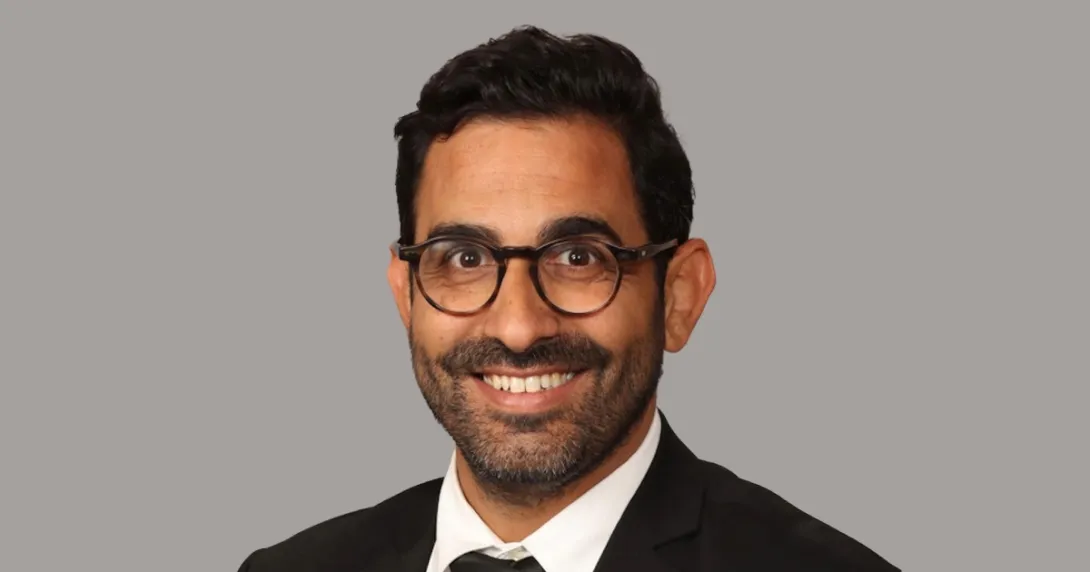
Dr. Amit Zabtani, cofounder and chief medical officer of CustoMED and orthopedic surgeon at UCLA
Photo courtesy of CustoMED
MobiHealthNews’ Emerging Technologies Series spotlights organizations developing, scaling and investing in innovative healthcare technologies. What follows is Part 6 of a seven-part series:
Dr. Amit Zabtani, cofounder and chief medical officer at CustoMED and orthopedic surgeon at UCLA, sat down with MobiHealthNews to discuss using AI automation and 3D printing to create patient-specific surgical instruments.
MobiHealthNews: How did CustoMED get started?
Dr. Amit Zabtani: We're coming from a huge hospital called Sheba Medical Center, and about eight years ago, when I was doing my residency, I was amazed by the idea that we were giving the same surgery every time to different patients. I already was familiar with technology from my army service. I served in special unit, and then I was amazed that we were operating on people with technology that was like 30 or 40 years old, every day.
So, we founded the 3D printing lab, or 3D printing center, at Sheba Medical Center. The head designer was the current CEO and my cofounder, Or Benifla, and he joined me, and when we opened the 3D lab, we called it the terrible name of the place you want to go when you don't have a good solution for your surgeries.
Every time you had like a really big or terrible surgery that you want to do really good pre-operative planning, you came to us. We know how to take the CT scan or the MRI to create the 3D model out of it, to do really good pre-operative planning, and then we start to understand that if we already have the anatomy, we can do like really good planning, like printing a model and understanding the anatomy better than before.
We realized what the burdens are of this technology. The burdens are the idea that there is a lot of manual work. Sheba gave us a lot of money to enjoy and hang up in this lab, and we have a lot of designers, we have a lot of money, we need a lot of software, and certainly need to invest a lot of time in order to get it done. And we don't have time as surgeons, right? And the lead time was terrible, even in the best labs in the world, and even if you're doing outsources, and you want to get it with outsourcing and creating those PSI [patient-specific instruments] with a company that is doing it every day, it takes two to three weeks to get it done, and the prices are extremely high.
But we realized that we're doing the same thing again and again and again in different cases. So we understand the potential of the automated process.
MHN: What were some of the challenges you faced when creating the technology? Because it seems like it is a pretty difficult task to get something so accurate to each individual patient.
Zabtani: Sheba Medical Center is a huge hospital, and our privilege is the idea that Sheba gave us all of their data space.
We are creating now, these days, every day, we're creating more and more segmentations, and we're teaching our algorithms on huge datasets of CT scans, and so it's easier for us to get better results of all of our automation processes using this huge data. No one else actually can create it that fast.
The biggest challenge, I will say, is we are not creating a platform just for one indication, just for one surgery. So, we're creating, now, PSI for shoulder surgery. We're creating PSI for total knee replacement, total hip replacement, for oncological resection. So, the idea that many companies are just focusing on one surgery. And the problem with that, it's limiting the use of technology to just surgeons that have high volume on a specific surgery. Because if I'm doing like 100 hips per year or 100 shoulders per year, my hospital will buy me a new robot or a new technology that will help me do it.
What we're doing at CustoMED, we're creating a platform that will have, like, all of those surgeries inside. This is why we're moving fast now to put a lot of surgeries inside. At the beginning – we're going to give it to more and more surgery fields in the future – but at the beginning, it's just with orthopedic surgery; every orthopedic surgeon will be able to use it for every indication.
It will be a platform for him to do his preoperative planning, and then to get a tool that will help him with the interoperative execution.
We already proved that you can use this technology for maxillofacial, for plastic surgery, for a lot of other surgical fields, but, as for now, we're focusing on orthopedic surgeries.
MHN: What stage is the company now?
Zabtani: We already have surgeons working with our platform and enjoying our patient-specific instrument worldwide. We have surgeons that are around Europe, around Asia, in Australia and in South America, and soon all across the U.S.
MHN: Are you currently raising funding?
Zabtani: We just ended the seed round of $6 million, which will be sufficient for us for the short future.
So, we're working both with hospitals, and we're putting 3D printers in the clinic or in the hospital in a way that they will be able to print their own PSI. We provide the platform, and they will print in the same day.
But other customers of ours, like the implant companies, we have the ability to take surgical sets and to create a personalization there, which means that we can give them the opportunity to give, say, the surgeon in the field of orthopedic, the orthopedic implant manufacturers, we give him the ability to create a personalization layer for the set.
We have a few big implant manufacturer customers, and when talking about scaling up, it means like, thousands of new cases per year just because they are our customers. They're bringing all of their customers to us, all of the surgeons with us, and this is how we already have thousands of new surgeries for next year.
So, this is why we raised the money now and hopefully, after next year, with having all of those new cases, also new customers coming up, we'll be able to run faster than what we did already in those last two years.