Photo: Cavan Images/Getty Images
In an effort to catch one of the deadliest cancers in the world early, Taiwan's national academy, Academia Sinica, and the National Taiwan University Hospital have teamed up to create a new AI-integrated metabolomics screening platform.
WHAT IT'S ABOUT
Researchers from both institutions recently developed PanMETAI, which integrates AI and nuclear magnetic resonance metabolomics through liquid biopsy, for screening pancreatic cancer.
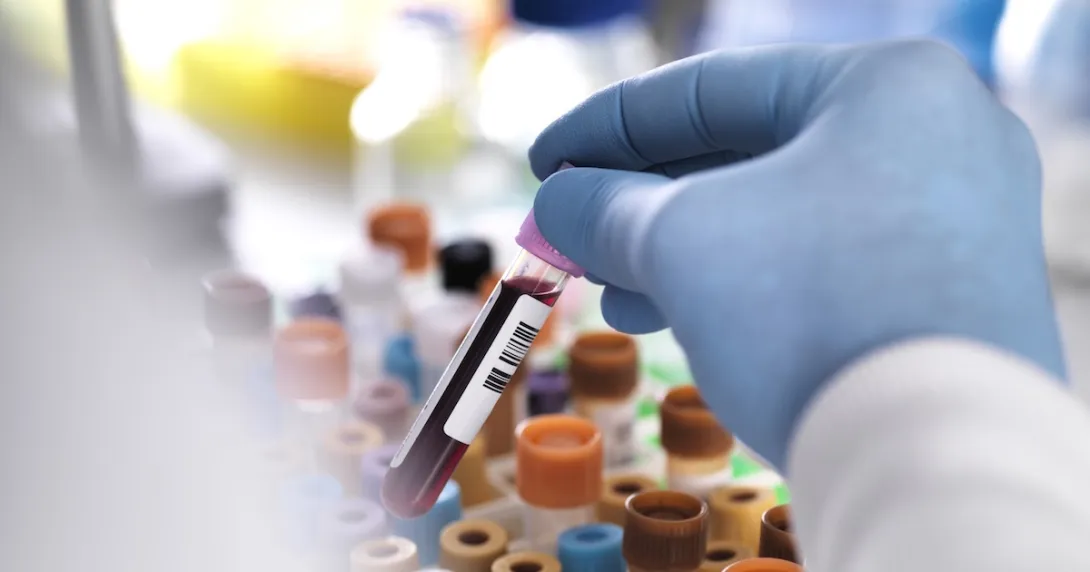
Their diagnostic model features a standardised liquid biopsy platform that can extract approximately 260,000 metabolic signals from a 500-microliter blood serum sample. In a media release, NTUH explained that these signals are systematically analysed through deep learning to capture key features associated with pancreatic cancer. The AI algorithm, according to the hospital, was specifically optimised for structured clinical data.
FINDINGS
PanMETAI was both validated independently using a blind NTUH test dataset and externally using a Lithuanian dataset. Based on findings published in Nature Communications, the AI-powered diagnostic model demonstrated its ability to distinguish between non-cancer and pancreatic cancer, achieving a "consistent" high area under the curve of 99% and 93%, respectively. This, NTUH said, indicates its potential for global application.
WHY IT MATTERS
Pancreatic cancer is one of the most difficult cancers to diagnose. It has as little as 12% five-year survival rate, with patients typically getting diagnosed at the advanced stage. In Taiwan, over 3,000 new cases of pancreatic cancer are reported each year.
Currently, tests rely on a single or limited set of biomarkers. According to the PanMETAI research team, their diagnostic model's approach in detection – utilising global metabolomic signals – "reflects the overall metabolic changes from pre-cancerous lesions to early-stage cancer, significantly enhancing early risk identification."
Findings from both independent and external validation studies, they said, demonstrate PanMETAI's "exceptional reproducibility and cross-ethnic applicability, effectively addressing the common challenge where medical AI models are limited by their specific data sources."
One of the study's leads, NTUH professor Yu-Ting Chang, also noted PanMETAI's potential to be applied for early diagnosis of other cancer types among high-risk individuals.
"The development of PanMETAI is the culmination of over twenty years of clinical expertise from NTUH, combined with Academia Sinica's long-term investment in fundamental research, metabolomics, and theoretical computational science," Academia Sinica shared in a separate statement.
THE LARGER TREND
Last year, NTUH introduced a new AI-powered diagnostic imaging service for pancreatic cancer. The self-pay service at the NTUH Department of Medical Imaging, called PANCREASaver, screens CT scans for suspicious lesions on the pancreas using deep learning algorithms. Prior national clinical validations showed the model achieving 80% sensitivity in detecting early-stage pancreatic tumours and an overall diagnostic accuracy of 90%.
Over the years, NTUH has accelerated its research and development of AI solutions. In 2024, it acquired two more supercomputer units, enabling its focus on multimodal large language model development.