Photo courtesy of Nutromics
The success of a recent clinical trial of a wearable patch that tracks a patient's medication levels may indicate that the age of digital blood testing is near.
An international research team, which involves researchers from the University of New South Wales, developed and tested a lab-in-a-patch device for continuous molecular monitoring with Australian diagnostics solution developer Nutromics.
In a pilot trial – the findings of which have been published in Nature Biotechnology – the patch was used to monitor levels of vancomycin, a last-resort antibiotic that was said to have always been tricky to dose.
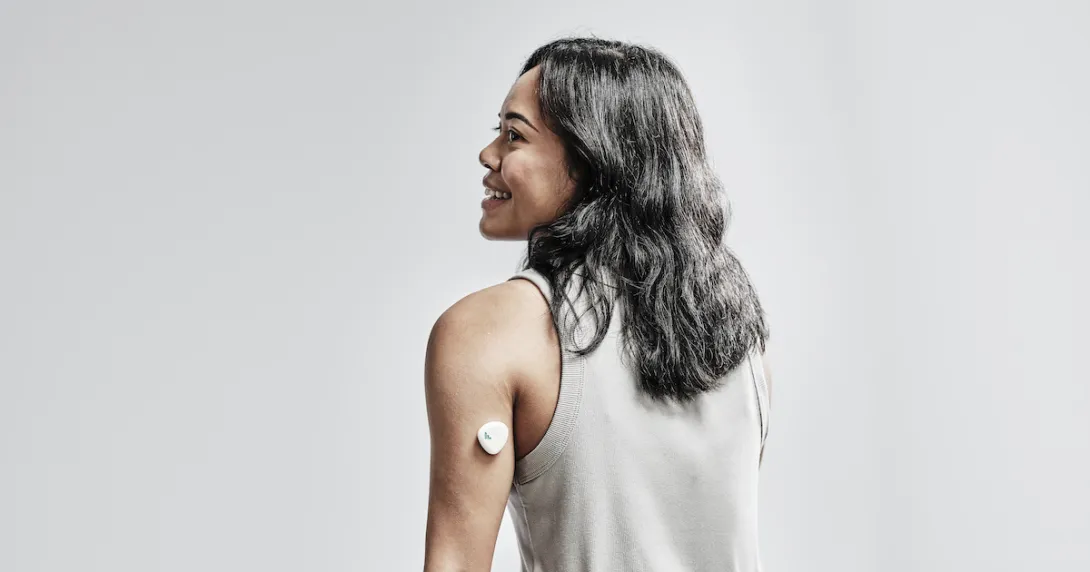
The patch, which is reportedly more comfortable than standard blood draws, uses synthetic DNA-based sensors, called aptamers, to measure dosage levels.
WHY IT MATTERS
Following its success, Scientia Professor Justin Gooding from UNSW School of Chemistry points to the possibility of monitoring patients at any time to ensure they receive the best, safest, and most effective treatment.
When asked if this breakthrough brings us closer to what could be considered digital blood testing, Prof Gooding told Mobihealth News: "This technology is very close to that vision."
"The main scientific hurdles to making the devices have been overcome, and the main engineering hurdles have been solved. The main challenges are [now] around clinical validation, so we feel we are very close."
According to Prof Gooding, there are no limits to what a DNA-based sensor patch can detect. "Aptamers have been developed for molecules as small as lactate and as large as large proteins."
The main constraint, however, is whether synthetic DNA can bind to the biomarker of interest in the right concentration range. The patch, he emphasised, is ideal for tracking biomarker or drug level change in minutes or hours.
Aptamer-based monitoring initially showed potential as a diagnostic tool when it was first applied in laboratory animals. According to Prof Gooding, it took a team of medical practitioners, engineers, and scientists to resolve the previous challenges around sterility and safety of the sensor-based patch.
What remains for now, said Prof Gooding, is testing the lab-in-a-patch in large-scale clinical trials to get "an understanding of the relationships between interstitial fluid levels of the biomarker or drug of interest and blood levels."
"The other hurdles are then more related to the business, distinct from the technological side of the devices."
Trials in ICUs across Australia are underway while Nutromics is working to get regulatory approval in the United States by next year, UNSW mentioned in a media release.
Nutromics is also exploring potential applications of the wearable patch, including continuous monitoring in cardiology and supporting triage in emergency departments.