Regulation

Michael Abrams of Numerof and Associates says that oversight for AI used in mental health care should mirror that of pharmaceuticals, with clear standards, safety testing and ongoing monitoring.

Private rheumatologist Dr Anandita Santosa in Singapore notes how current AI in healthcare priorities practically leave autoimmune and rheumatic diseases behind and shares what can be done to build a more comprehensive AI-driven preventive care ecosystem.

Janus Health's Carol Howard says the WISeR model's AI-driven reviews of specific Medicare services may trigger denials. To avoid this, hospitals must align clinical documentation with local and national coverage determination rules.
Ceribell received breakthrough device designation for its LVO stroke detection monitor, and Naox Technologies secured 510(k) clearance for its in-ear EEG device.

The state is piloting a program with Doctronic that allows AI to legally participate in medical decision-making for patients with chronic conditions in need of prescription renewals.

The extension allows providers to continue remotely prescribing Schedule II–V controlled substances under specific conditions to prevent a disruptive "telemedicine cliff."
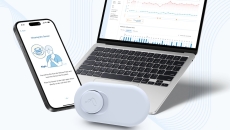
AeviceMD says it has yet to conduct pilot deployments, which would focus on incorporating respiratory monitoring into outpatient asthma management pathways.
Executives pointed to faster-than-expected AI adoption in healthcare, shifting regulatory signals and growing demand for AI tools that deliver measurable outcomes.

Dr. Doug Fridsma, former ONC chief science officer and current CMIO at Health Universe, discusses the challenges of AI in healthcare and balancing innovation with privacy, safety and regulation.
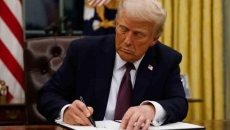
The executive order says it revokes attempts to paralyze the AI industry and establishes an AI Litigation Task Force to challenge state AI laws inconsistent with national policy.